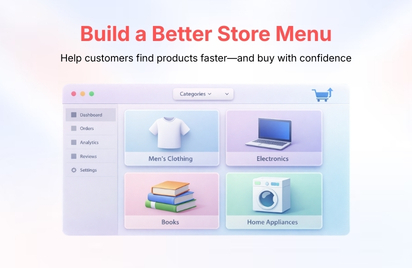
Product Categories help you organize your products into meaningful groups so customers can easily browse your store and quickly find what they are looking for. A well-structured category system improves user experience, makes your store look professional, and increases your chances of converting visitors into buyers.
Whether you sell fashion, electronics, groceries, or services, product categories act like signboards in a supermarket — guiding customers to the right section without confusion.
What Are Product Categories? #
Product Categories are groups used to classify similar products together. Instead of showing all products in one long list, categories allow you to divide them into sections based on type, usage, or audience.
Examples of Product Categories: #
Men’s Clothing
Women’s Fashion
Electronics
Books
Home Appliances
Beauty & Personal Care
Groceries
Kids & Toys
This makes your store neat, structured, and customer-friendly.
Why Product Categories Are Important #
Creating proper product categories offers many benefits:
Better Customer Experience #
Customers can easily browse products without getting lost. They spend less time searching and more time shopping.
Faster Product Discovery #
When products are grouped logically, customers can reach the desired product in just a few clicks.
Higher Conversion Rate #
A clean navigation structure increases trust and encourages customers to complete purchases.
Improved SEO (Search Engine Visibility) #
Search engines understand your store better when categories are well organized, helping your store rank higher in search results.
Professional Store Appearance #
Your store looks structured and well-managed, which builds confidence in your brand.
How to Create Effective Product Categories #
Here are some best practices to create smart and useful categories:
1. Keep Category Names Simple #
Use clear and common words that customers understand easily.
✔ Good: “Men’s Shoes”
❌ Bad: “Footwear Collection for Males”
2. Don’t Create Too Many Categories #
Too many categories can confuse customers. Try to keep main categories limited and meaningful.
Example structure:
Clothing
Men
Women
Kids
3. Group Similar Products Together #
Products in the same category should be related and make sense together.
Example: Electronics → Mobile Phones, Laptops, Accessories
4. Arrange Categories in Logical Order #
Put the most popular categories at the top of your menu or homepage.
Example:
New Arrivals
Best Sellers
Main Categories
5. Use Images for Categories #
Adding category images makes your store visually attractive and helps customers identify sections faster.
Examples of Product Category Structures #
👕 Fashion Store #
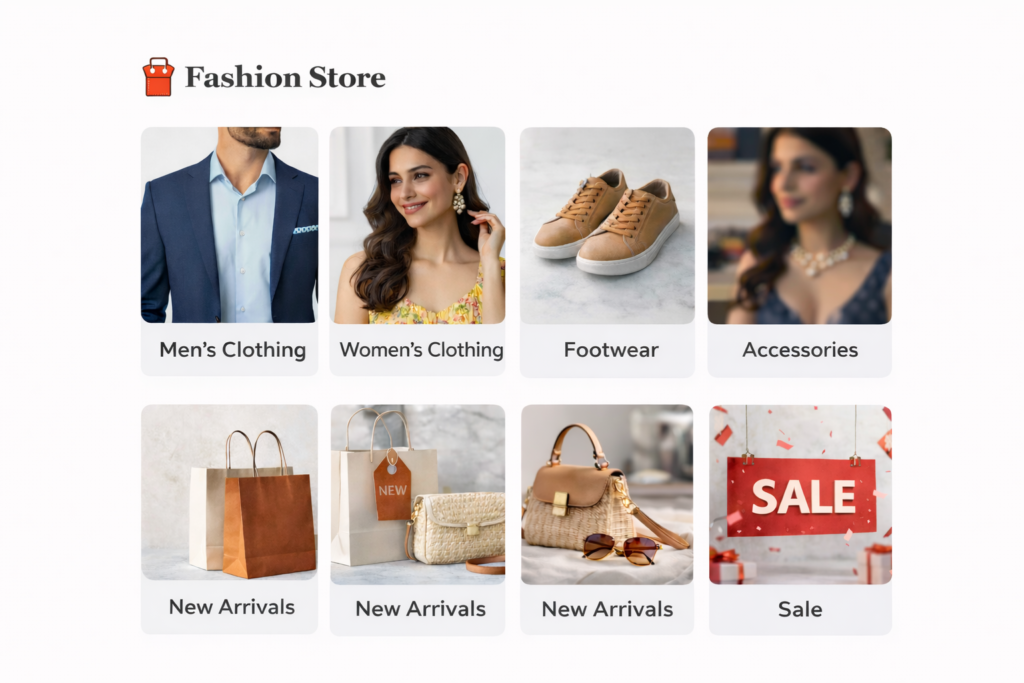
Men’s Clothing
Women’s Clothing
Footwear
Accessories
New Arrivals
📱 Electronics Store #
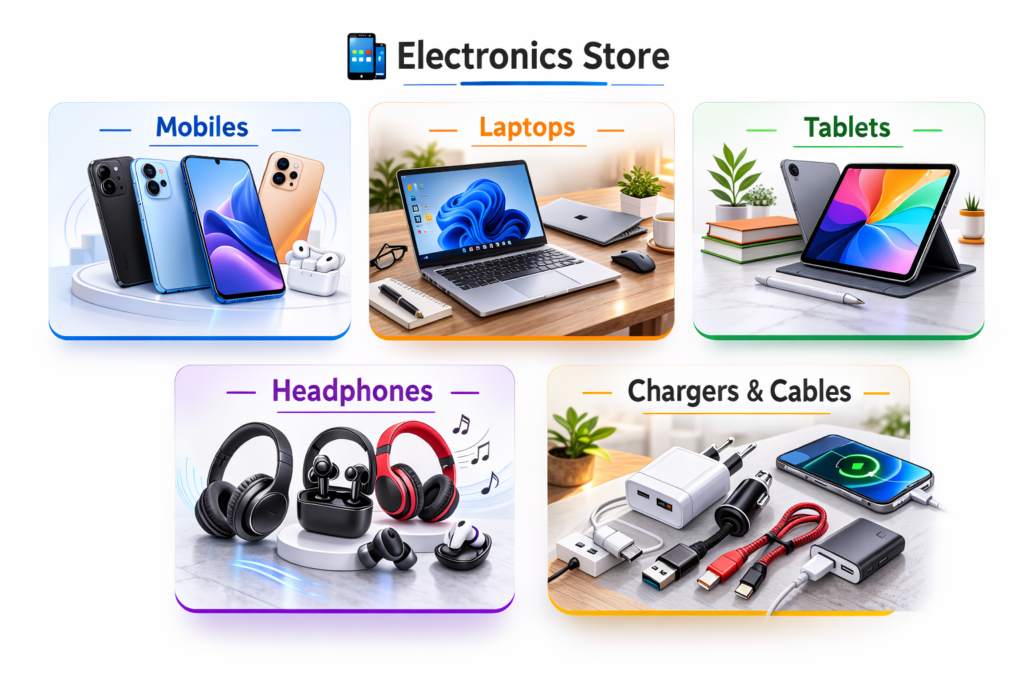
Mobiles
Laptops
Tablets
Headphones
Chargers & Cables
🏠 Grocery Store #
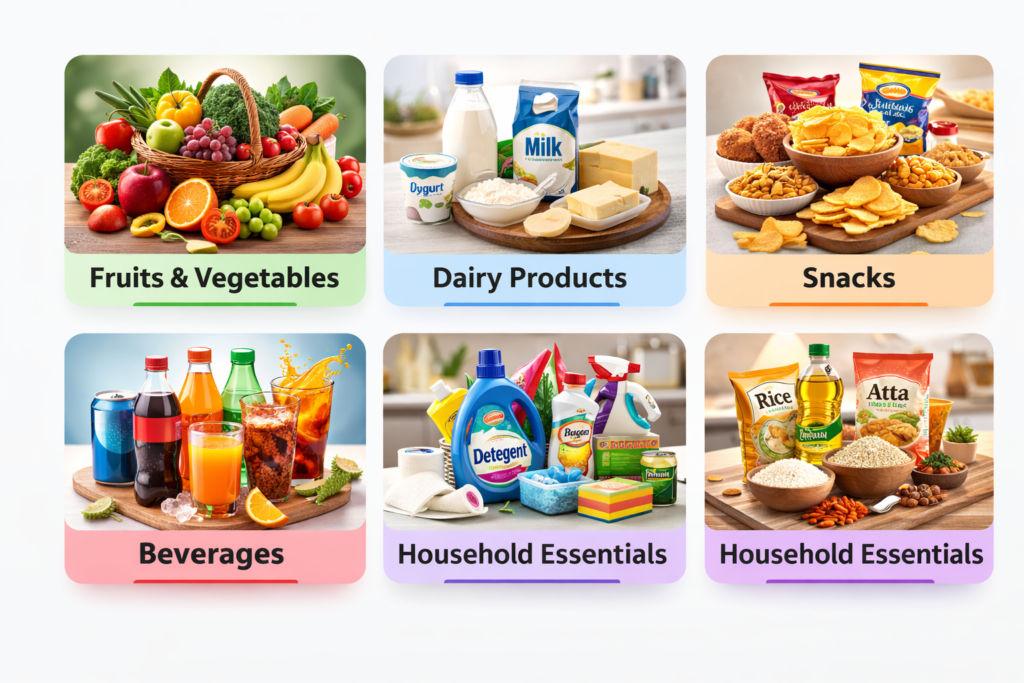
Fruits & Vegetables
Dairy Products
Snacks
Beverages
Household Essentials
Manage Product Categories in Shoopy #
You can easily manage categories in your admin panel:
Add new categories anytime
Rename or delete categories
Assign products to categories
Change category order
Hide or show categories in navigation
This helps keep your store updated as your product range grows.
Common Mistakes to Avoid #
🚫 Creating too many small categories
🚫 Using confusing category names
🚫 Mixing unrelated products in one category
🚫 Not updating categories regularly
🚫 Ignoring mobile navigation
Avoiding these mistakes ensures smooth browsing for your customers.
How Product Categories Help Increase Sales #
Well-organized categories directly impact your sales by:
Making products easier to find
Reducing customer frustration
Increasing time spent on your store
Encouraging customers to explore more products
Improving trust and professionalism
When customers enjoy browsing your store, they are more likely to purchase.
Final Thoughts #
Product Categories are the foundation of a successful online store. They guide customers, improve navigation, and create a smooth shopping experience. By creating clear, simple, and well-structured categories, you make it easier for customers to discover your products and feel confident about buying from your store.